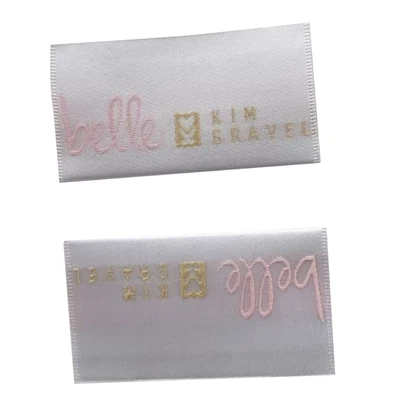
What is the cold resistance of recycled soft satin labels?
Leave a message

As a supplier of Recycled Soft Satin Labels, I've encountered numerous inquiries regarding the cold resistance of these labels. In this blog, I'll delve into the cold resistance of recycled soft satin labels, exploring the scientific aspects, practical implications, and how it impacts various applications.
Understanding Recycled Soft Satin Labels
Recycled soft satin labels are crafted from recycled materials, offering an eco - friendly alternative to traditional labels. They possess a smooth, satin - like finish that gives a high - end look and feel. These labels are commonly used in the fashion, textile, and other industries for branding, size indication, and care instructions.
The Science Behind Cold Resistance
Cold resistance refers to a material's ability to maintain its physical and chemical properties under low - temperature conditions. For recycled soft satin labels, several factors influence their cold resistance.
Material Composition
The base material of recycled soft satin labels plays a crucial role. These labels are often made from recycled polyester or other synthetic fibers. Polyester generally has good cold - resistance properties. At low temperatures, polyester fibers can maintain their structural integrity to a certain extent. The molecular structure of polyester is relatively stable, and the intermolecular forces are strong enough to resist the effects of cold.
However, the recycled nature of the material can introduce some variability. Recycled fibers may have undergone multiple processing steps, which could potentially affect their cold - resistance. For example, if the recycling process involves harsh chemicals or high - energy treatments, it might weaken the fibers at a molecular level, reducing their ability to withstand cold.
Coating and Laminations
Many recycled soft satin labels have coatings or laminations applied to enhance their durability, printability, or appearance. These coatings can also impact cold resistance. Some coatings are designed to be flexible at low temperatures, while others may become brittle.
For instance, a label with a hard, inflexible coating may crack or peel when exposed to cold. On the other hand, a soft, elastomeric coating can help the label adapt to the contraction and expansion that occurs with temperature changes, improving its cold resistance.
Practical Implications of Cold Resistance
The cold resistance of recycled soft satin labels has several practical implications in different applications.
Outdoor and Cold - Climate Use
In outdoor applications or in cold - climate regions, labels need to withstand low temperatures. For example, clothing brands that sell winter wear may use recycled soft satin labels. If the labels do not have sufficient cold resistance, they may become damaged during storage, transportation, or use in cold environments.
Cracks in the label can not only affect the appearance but also compromise the information printed on it. Size labels, care instructions, or brand logos may become illegible, which can lead to customer dissatisfaction and potential product returns.
Cold Storage
In the food and beverage industry, products are often stored in cold rooms or refrigerators. Labels on these products need to remain intact and legible. Recycled soft satin labels used for food packaging should have good cold resistance to ensure that they do not delaminate, fade, or become brittle over time in cold storage.
Testing Cold Resistance
To ensure the quality of recycled soft satin labels in terms of cold resistance, various testing methods can be employed.
Cold Chamber Testing
One common method is to use a cold chamber. Labels are placed in the chamber, and the temperature is gradually lowered to a pre - determined level, such as - 20°C or - 40°C, depending on the intended application. The labels are then observed for any signs of damage, such as cracking, peeling, or loss of adhesion.
Flexibility Testing
After cold exposure, flexibility testing can be conducted. This involves bending the labels to a certain angle to check if they can maintain their integrity without breaking. A label that remains flexible after cold exposure is more likely to have good cold resistance.
Comparison with Other Label Types
When considering cold resistance, it's useful to compare recycled soft satin labels with other common label types.
Color Wash Label
Color Wash Labels, as described on Color Wash Label, are often used in the textile industry for care instructions. These labels are designed to withstand washing processes, but their cold resistance may vary. Some color wash labels may have better cold - resistance properties due to their specific material and coating combinations, while others may be more prone to damage in cold conditions.
Butter Paper Washing Label
Butter Paper Washing Labels, available at Butter Paper Washing Label, are known for their softness and printability. However, they may not have the same level of cold resistance as recycled soft satin labels. Butter paper is a more natural and porous material, which can make it more susceptible to damage from cold and moisture.
DuPont Washing Label
DuPont Washing Labels, detailed on DuPont Washing Label, are made from high - performance materials. They generally have good durability and may offer better cold resistance compared to some other label types. However, they also come at a higher cost. Recycled soft satin labels can provide a more cost - effective alternative with reasonable cold - resistance properties.
Improving Cold Resistance
As a supplier, I'm always looking for ways to improve the cold resistance of our recycled soft satin labels.
Material Selection
We carefully select the recycled materials used in our labels. We work with suppliers who can provide high - quality recycled fibers that have been processed in a way that minimizes damage to the fibers. By choosing the right base material, we can enhance the cold - resistance of the labels.
Coating Development
We are also investing in research and development of coatings. We are exploring new formulations that can improve the flexibility and cold - resistance of the labels. These coatings need to be compatible with the recycled soft satin material and should not compromise other important properties such as printability and adhesion.
Conclusion
The cold resistance of recycled soft satin labels is a complex but important aspect. It is influenced by factors such as material composition, coatings, and laminations. Understanding these factors can help us as suppliers better meet the needs of our customers, especially those in industries where labels are exposed to cold environments.


If you are in need of high - quality recycled soft satin labels with good cold resistance, I encourage you to reach out for a procurement discussion. We can work together to find the best label solution for your specific requirements.
References
- Textile Labeling Handbook: A comprehensive guide on label materials and properties.
- Journal of Applied Polymer Science: Articles on the performance of synthetic fibers under different environmental conditions.
- Proceedings of the International Conference on Packaging and Labeling: Papers on the latest trends and research in label technology.