Can I iron a nylon garment with a DuPont Washing Label without a pressing cloth?
Leave a message

Hey there! As a supplier of DuPont Washing Labels, I get a ton of questions from folks about how to handle different fabrics and labels. One question that pops up quite often is, "Can I iron a nylon garment with a DuPont Washing Label without a pressing cloth?" Let's dig into this and find out.
First off, let's talk a bit about nylon. Nylon is a synthetic fabric that's known for its strength, durability, and elasticity. It's used in all sorts of clothing, from sportswear to lingerie. But here's the thing: nylon has a relatively low melting point compared to some other fabrics. This means it can easily get damaged if it's exposed to too much heat.
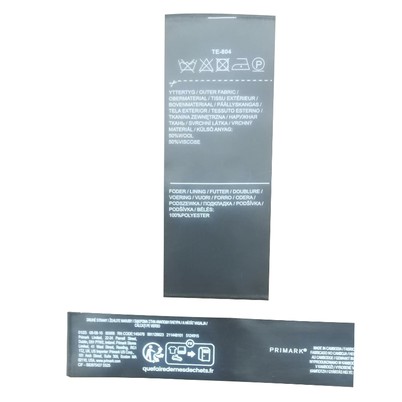
Now, DuPont Washing Labels are designed to provide clear and accurate care instructions for your garments. They're made to be durable and long - lasting, but they also need to be treated with care. These labels are usually attached to the garment in a way that ensures they stay put through multiple washes and wears.
So, can you iron a nylon garment with a DuPont Washing Label without a pressing cloth? Well, it depends.
The Risks of Ironing Without a Pressing Cloth
If you iron a nylon garment without a pressing cloth, you run the risk of melting the nylon fibers. The heat from the iron can cause the nylon to warp, distort, or even create shiny spots on the fabric. And let's not forget about the DuPont Washing Label itself. The label is made of materials that are sensitive to heat, and direct contact with a hot iron can damage it. The ink on the label could fade or smear, and the fabric of the label could melt or shrink.
For example, if you're in a hurry and just quickly run the iron over a nylon shirt with the label on it, you might end up with a ruined garment. The label might become unreadable, and the nylon fabric could look a mess.
When It Might Be Okay
There are some cases where you might be able to get away with ironing without a pressing cloth, but you need to be extremely careful. If your DuPont Washing Label specifically says that the garment can be ironed at a low temperature, and you set your iron to the lowest possible setting, you might have a chance. However, even then, I'd still recommend using a pressing cloth as an extra layer of protection.
Let's say you have a nylon blend garment that has a small percentage of nylon. The other fibers in the blend might be more heat - resistant, and the overall melting point of the fabric might be higher. In this case, with the iron on a very low setting, you could potentially iron it without a pressing cloth, but you should test a small, inconspicuous area first.


The Benefits of Using a Pressing Cloth
Using a pressing cloth is always a good idea when ironing nylon garments with DuPont Washing Labels. A pressing cloth acts as a barrier between the hot iron and the fabric and the label. It helps to distribute the heat evenly, reducing the risk of damage.
A pressing cloth can also prevent the nylon from sticking to the iron. Nylon has a tendency to stick to hot surfaces, and this can not only damage the fabric but also make a mess of your iron. By using a pressing cloth, you can avoid this problem and ensure a smooth ironing process.
Our DuPont Washing Labels and Their Features
As a supplier of DuPont Washing Labels, I'm really proud of the products we offer. Our labels are made with high - quality materials that are designed to withstand the rigors of washing and wearing. They're printed with clear and detailed care instructions, so you always know how to take care of your garments.
We offer a variety of different types of DuPont Washing Labels. For instance, the Barcode White Recycled Tape Washing Label is great for those who want to include barcode information on their labels. It's made from recycled materials, which is not only good for the environment but also adds a unique touch to the label.
The QR Code Wash Label is another popular option. With this label, you can include a QR code that links to more detailed care instructions or even product information. It's a modern and convenient way to provide extra information to your customers.
And then there's the Recycled Soft Satin Label. This label has a soft and luxurious feel, and it's also made from recycled materials. It's perfect for high - end garments where you want the label to look and feel great.
Conclusion
In conclusion, while it might be possible to iron a nylon garment with a DuPont Washing Label without a pressing cloth in some very specific circumstances, it's generally not a good idea. The risks of damaging the nylon fabric and the label are just too high. Using a pressing cloth is a simple and effective way to protect both the garment and the label.
If you're in the market for high - quality DuPont Washing Labels for your garments, we're here to help. We can provide you with the right labels that meet your specific needs. Whether you're a small clothing brand or a large manufacturer, we have the expertise and the products to support you.
If you're interested in learning more about our DuPont Washing Labels or would like to discuss your requirements, don't hesitate to reach out. We'd love to have a chat with you and help you find the perfect labels for your products.
References
- "Care Instructions for Synthetic Fabrics", Textile Institute Journal
- "The Science of Ironing Different Fabrics", Home Appliance Research Magazine