Can I use 3D printing for ordinary hang tags?
Leave a message

As a long - standing supplier of Ordinary Hang Tag, I've witnessed numerous advancements in manufacturing technologies over the years. One question that often comes up in my industry discussions is, "Can I use 3D printing for ordinary hang tags?" In this blog post, I'll explore this topic in depth, weighing the pros and cons to help you make an informed decision.
Understanding 3D Printing
Before delving into its application for ordinary hang tags, let's first understand what 3D printing is. 3D printing, also known as additive manufacturing, is a process of creating three - dimensional objects from a digital file. It works by adding material layer by layer until the object is fully formed. This technology has been used in various industries, from aerospace to healthcare, due to its ability to create complex geometries and customized parts.
Advantages of Using 3D Printing for Ordinary Hang Tags
Customization
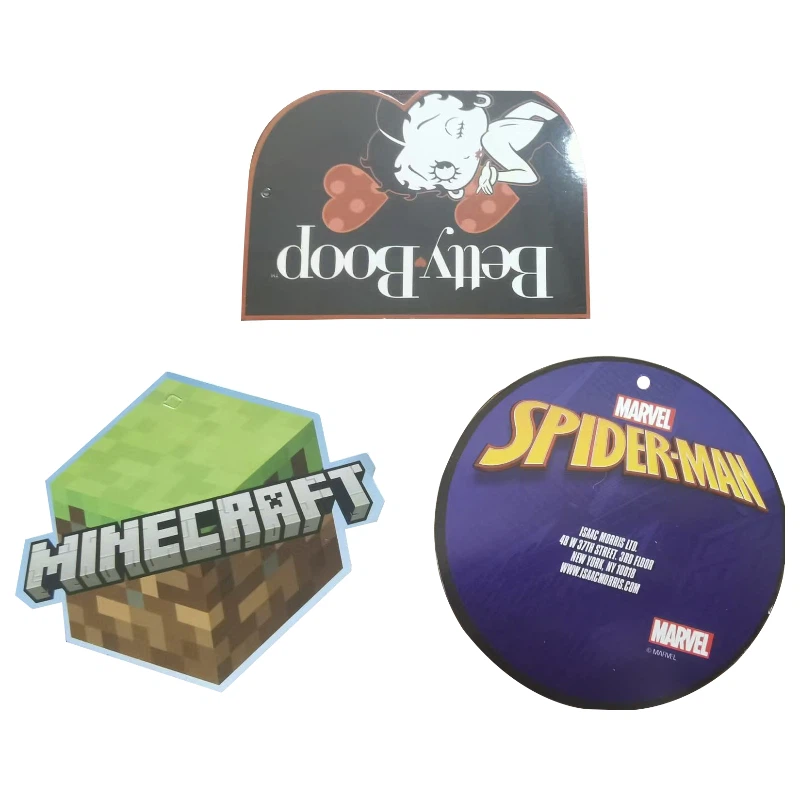
One of the most significant advantages of 3D printing for ordinary hang tags is the level of customization it offers. Traditional manufacturing methods often have limitations when it comes to creating unique shapes, sizes, or intricate designs. With 3D printing, you can bring any creative concept to life. Whether it's a hang tag with a company logo in a highly detailed 3D form or a tag with a unique texture, the possibilities are endless. This level of customization can help your brand stand out on the shelves, making your products more memorable to consumers.

Rapid Prototyping
If you're in the process of designing new hang tags, 3D printing allows for rapid prototyping. You can quickly turn your digital designs into physical samples. This enables you to test different concepts, evaluate the functionality, and make necessary adjustments before committing to a large - scale production. It saves both time and money in the long run, as you can avoid costly mistakes associated with mass - producing hang tags that don't meet your expectations.
Low - Volume Production
For small - scale businesses or those with niche product lines, 3D printing is an ideal solution for low - volume production of ordinary hang tags. Traditional manufacturing methods often require high minimum order quantities, which can be a barrier for businesses with limited budgets or those testing the market. 3D printing allows you to produce hang tags in small quantities without incurring excessive setup costs, making it a cost - effective option for short - run production.
Challenges of Using 3D Printing for Ordinary Hang Tags
Cost for High - Volume Production
While 3D printing is cost - effective for low - volume production, it becomes less economical when it comes to high - volume manufacturing. The materials used in 3D printing can be relatively expensive, and the printing process is generally slower compared to traditional methods such as injection molding or die - cutting. As a result, the per - unit cost of producing hang tags using 3D printing can be significantly higher when producing large quantities.
Material Limitations
The choice of materials for 3D printing is somewhat limited compared to traditional manufacturing. For ordinary hang tags, you need materials that are durable, lightweight, and have good printability. While there are various 3D printing materials available, not all of them may meet the specific requirements for hang tags. For example, some materials may not be resistant to moisture or may not have the right flexibility, which can affect the functionality and longevity of the hang tags.
Production Speed
3D printing is a relatively slow process, especially when compared to mass - production methods. If you have a tight deadline for a large order of hang tags, 3D printing may not be able to meet your requirements. The layer - by - layer printing process can take hours or even days to complete a single hang tag, depending on its complexity. This can be a significant drawback for businesses that need to quickly restock their inventory or meet urgent market demands.
Comparing 3D Printing with Traditional Manufacturing Methods
Traditional Manufacturing: Injection Molding
Injection molding is a widely used method for producing hang tags. It involves injecting molten plastic into a mold cavity, which then cools and solidifies into the desired shape. This method is highly suitable for high - volume production as it can produce a large number of hang tags quickly and at a relatively low per - unit cost. However, the initial setup cost for creating the molds can be quite high, and it's not as flexible as 3D printing when it comes to customization.
Traditional Manufacturing: Die - Cutting
Die - cutting is another common method for making hang tags. It uses a sharp die to cut out the shape of the hang tag from a sheet of material, such as paper or cardboard. This method is simple, fast, and cost - effective for producing hang tags in large quantities. However, similar to injection molding, it has limitations in terms of customization. Complex shapes and 3D features are difficult to achieve with die - cutting.
Considerations for Using 3D Printing in Your Hang Tag Production
Design Complexity
If your hang tag design is highly complex and requires detailed 3D elements, 3D printing is likely the best option. The ability to create intricate designs with ease gives it an edge over traditional manufacturing methods. However, if your design is relatively simple, traditional methods may be more cost - effective.
Production Volume
As mentioned earlier, the production volume is a crucial factor. For low - volume production or prototyping, 3D printing is a great choice. But for high - volume orders, you may need to consider traditional manufacturing methods to keep the costs down.
Time Constraints
If you have a tight production schedule, 3D printing may not be the most suitable option due to its slow production speed. In such cases, traditional manufacturing methods can provide a faster turnaround time.
Conclusion
In conclusion, 3D printing offers unique advantages for ordinary hang tag production, especially in terms of customization, rapid prototyping, and low - volume production. However, it also comes with its own set of challenges, such as high costs for high - volume production, material limitations, and slow production speed. As a supplier of Ordinary Hang Tag, I believe that a combination of 3D printing and traditional manufacturing methods can be the most effective approach. Use 3D printing for prototyping and low - volume, highly customized hang tags, and traditional methods for large - scale production.
If you're interested in exploring different options for your hang tag needs, whether it's Ordinary Hang Tag, Film Hang Tag, or Multi Color Printed Hang Tag, I'd be more than happy to discuss your requirements. Feel free to reach out, and we can start a conversation about how to best meet your hang tag production goals.
References
- Gibson, I., Rosen, D. W., & Stucker, B. (2010). Additive Manufacturing Technologies: 3D Printing, Rapid Prototyping, and Direct Digital Manufacturing. Springer Science & Business Media.
- Wohlers, T. (2018). Wohlers Report 2018: 3D Printing and Additive Manufacturing State of the Industry. Wohlers Associates.