Can Ingredient Wash Labels be used on kitchenware?
Leave a message

Hey there! As a supplier of Ingredient Wash Labels, I often get asked a really interesting question: Can Ingredient Wash Labels be used on kitchenware? Today, I'm gonna dive into this topic and share my thoughts and knowledge on it.
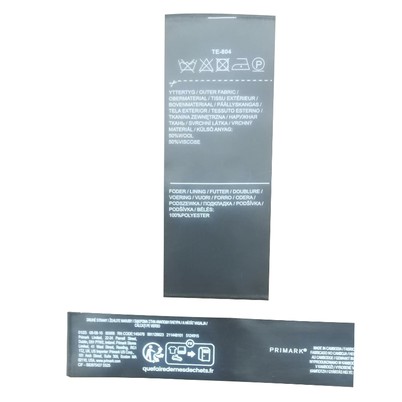
First off, let's talk about what Ingredient Wash Labels are. These labels are designed to provide detailed information about the ingredients, care instructions, and sometimes even the origin of a product. They're super important for consumers who want to make informed decisions about what they're buying and how to take care of it. You can check out more about Ingredient Wash Label on our website.
Now, let's think about kitchenware. Kitchenware comes in all shapes, sizes, and materials. From stainless - steel pots and pans to ceramic plates and glass bowls, the variety is huge. The question of using Ingredient Wash Labels on kitchenware depends on a few key factors.
Compatibility with Kitchenware Materials
One of the first things to consider is whether the label material is compatible with the kitchenware material. For example, if you're dealing with a non - porous surface like stainless steel or glass, the label needs to adhere well. Some labels might use adhesives that work great on fabric but won't stick to a smooth metal or glass surface.
On the other hand, if the kitchenware is made of porous materials like wood or some ceramics, the label should be able to withstand moisture and cleaning without getting damaged or peeling off. Our DuPont Washing Label is known for its strong adhesive and durability, which might be a good option for some types of kitchenware. It can stick well to different surfaces and resist normal wear and tear.
Resistance to Kitchen Conditions
The kitchen is a tough environment. There's heat from stoves and ovens, moisture from washing and steam, and sometimes exposure to various cleaning agents. Ingredient Wash Labels need to be able to handle these conditions.


Heat can be a major issue. If a label is placed on a pot that goes on the stove, it should not melt or lose its adhesive properties. Similarly, when the kitchenware is washed in hot, soapy water, the label should stay intact and the information on it should remain legible. Our Recycled Soft Satin Label is made from a material that can withstand a certain amount of heat and moisture, making it a potential candidate for some kitchenware applications.
Regulatory Requirements
Another important aspect is the regulatory requirements. In some regions, there are specific rules about what information should be provided on the labels of kitchenware. This might include details about the materials used, safety warnings, and care instructions. Ingredient Wash Labels can be customized to include all the necessary information, but it's crucial to make sure that they meet the local regulations.
For example, if the kitchenware is made of a material that might leach harmful substances under certain conditions, the label should clearly state the precautions. As a supplier, we're well - versed in these regulations and can help you create labels that are compliant.
Benefits of Using Ingredient Wash Labels on Kitchenware
There are actually several benefits to using Ingredient Wash Labels on kitchenware. For consumers, it provides transparency. They can know exactly what the kitchenware is made of, which is especially important for those with allergies or sensitivities. For example, if a plate is made with a particular type of clay that might cause a reaction in some people, the label can inform them.
For manufacturers and sellers, it builds trust with the customers. When they see that the product comes with a detailed label, they're more likely to believe that the product is of high quality and has been properly tested. It also helps in brand building. A well - designed and informative label can make the kitchenware stand out on the shelves.
Limitations and Challenges
Of course, there are also some limitations and challenges. As I mentioned earlier, finding the right label material for different types of kitchenware can be tricky. And the cost can be a factor too. Customizing labels to meet specific requirements and using high - quality materials can increase the overall cost of production.
Another challenge is the size of the label. Kitchenware items can be small, and there might not be enough space to include all the necessary information. In such cases, we need to be creative in designing the label to make sure that the most important details are included.
Real - World Examples and Case Studies
Let's look at some real - world examples. There are some high - end cookware brands that use Ingredient Wash Labels to great effect. They provide information about the type of steel used in the pots and pans, the coating materials, and the recommended cleaning methods. This not only helps the consumers but also positions the brand as a trustworthy and high - quality option in the market.
In some cases, small - batch ceramic kitchenware producers use labels to tell the story of their products. They include information about the local clay they use, the traditional firing techniques, and the artist who made the piece. This adds a personal touch and makes the product more appealing to consumers who value craftsmanship.
Making the Decision
So, can Ingredient Wash Labels be used on kitchenware? The answer is yes, but with careful consideration. If you're a kitchenware manufacturer or seller, you need to think about the material of your products, the kitchen conditions they'll be exposed to, and the regulatory requirements.
As a supplier of Ingredient Wash Labels, we're here to help you make the right choice. We have a wide range of label materials and customization options to suit your needs. If you're interested in learning more about how our labels can work for your kitchenware products, don't hesitate to reach out. We can have a detailed discussion about your specific requirements and provide you with samples and quotes.
In conclusion, Ingredient Wash Labels have the potential to add a lot of value to kitchenware products. They can enhance the consumer experience, meet regulatory needs, and boost your brand. So, if you're in the kitchenware business, it's definitely worth considering using these labels.
Feel free to contact us to start the conversation about how we can work together to create the perfect Ingredient Wash Labels for your kitchenware. Let's make your products shine with detailed and informative labels!
References
- General knowledge from the industry of kitchenware and label production.
- Insights from market research on consumer preferences for labeled kitchenware products.