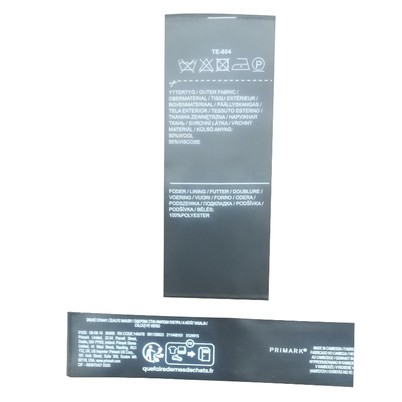
What if the DuPont Washing Label is inconsistent with the manufacturer's verbal advice?
Leave a message

Hey there! As a supplier of DuPont Washing Labels, I've seen all sorts of situations in the laundry label business. One of the most head - scratching scenarios is when the DuPont Washing Label is inconsistent with the manufacturer's verbal advice. Let's dig into this issue and see what it means, why it happens, and how we can deal with it.
Understanding the Discrepancy
First off, what does it mean when the DuPont Washing Label and the manufacturer's verbal advice don't match? Well, the DuPont Washing Label is supposed to be a clear set of instructions for how to wash, dry, and care for a particular garment. It's based on a standardized system that uses symbols and text to convey important information. On the other hand, the manufacturer's verbal advice might come from a salesperson, a customer service rep, or even the designer themselves.
For example, the DuPont label might say "Dry Clean Only," but the manufacturer tells the customer that it can be hand - washed in cold water. This kind of inconsistency can be really confusing for the end - user. They're left wondering which advice to follow. If they go with the label, they might end up spending more money on dry cleaning. If they follow the verbal advice, they could risk damaging the garment.
Why Does This Happen?
There are a few reasons why this inconsistency might occur. One common reason is miscommunication within the manufacturing process. Sometimes, the people who design the product and the people who create the washing labels are in different departments. They might not have a clear line of communication, leading to differences in what they think is the best way to care for the garment.
Another reason could be a lack of understanding of the DuPont labeling system. The DuPont labels have very specific rules and guidelines. If the person creating the label isn't well - versed in these rules, they might make mistakes. For instance, they might misinterpret the fabric's properties and label it incorrectly.
Also, manufacturers might give verbal advice that's more lenient to make the product more appealing to customers. They know that some people don't want to deal with the hassle or expense of dry cleaning, so they tell them it can be washed at home. But this can backfire if the garment gets damaged.
The Impact on Customers
Customers are the ones who bear the brunt of this inconsistency. They rely on the washing instructions to keep their clothes in good condition. When they get conflicting advice, it creates a lot of stress. They might be worried about ruining their new purchase, especially if it's an expensive item.
Moreover, if a customer follows the verbal advice and the garment gets damaged, they might be disappointed and lose trust in the brand. They might also be less likely to buy from that manufacturer again. And let's not forget the potential waste. If a garment gets damaged because of incorrect washing, it might end up in the landfill sooner than it should.
How We Can Help as a Supplier
As a DuPont Washing Label supplier, we have a role to play in resolving this issue. First of all, we can provide better education to our clients. We can offer training sessions on the DuPont labeling system so that they understand how to create accurate labels. This can help reduce the chances of mislabeling.
We also need to encourage open communication between different departments within the manufacturing companies. We can act as a bridge, facilitating conversations between the product designers and the label creators. By doing this, we can ensure that the label accurately reflects the product's care requirements.
In addition, we offer a variety of label options to suit different needs. For example, we have Screen Printed Wash Label, which are durable and can display clear instructions. Our QR Code Wash Label are also a great option. They can store a lot of information, and customers can scan the code with their phones to get detailed care instructions. And if you're looking for a more eco - friendly option, our Butter Paper Washing Label are made from sustainable materials.
What Can Manufacturers Do?
Manufacturers need to take responsibility for this issue as well. They should have a quality control process in place to double - check the washing labels before the products go to market. This can help catch any discrepancies early on.
They also need to be honest with their customers. Instead of giving lenient verbal advice, they should provide accurate information about the care requirements. If a garment really needs to be dry cleaned, they should make that clear.


Conclusion
The inconsistency between DuPont Washing Labels and manufacturer's verbal advice is a real problem that affects both customers and manufacturers. But by working together, we can find solutions. As a supplier, we're committed to providing high - quality labels and helping our clients create accurate care instructions.
If you're in the market for reliable and accurate DuPont Washing Labels, we'd love to have a chat with you. We can discuss your specific needs and find the best label options for your products. Whether you're a small - scale manufacturer or a large brand, we have the expertise and resources to help you. So, don't hesitate to reach out and start a conversation about your labeling requirements.
References
- "Textile Care Labeling: Best Practices for Manufacturers." Industry Journal of Textiles, 2022.
- "The Importance of Accurate Washing Labels." Consumer Protection Magazine, 2023.