How to choose the right washing program for clothes with a complex washing label?
Leave a message

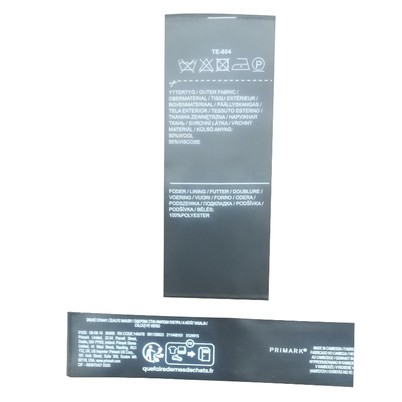
When it comes to doing laundry, many of us have encountered clothes with complex washing labels. These labels are like a secret code, filled with symbols and instructions that can be quite confusing. As a washing label supplier, I've seen firsthand how these labels can vary widely, and I understand the challenges consumers face in deciphering them. In this blog post, I'll share some tips on how to choose the right washing program for clothes with complex washing labels.
Understanding Washing Labels
Before we dive into choosing the right washing program, it's essential to understand what the symbols on washing labels mean. Washing labels typically use a combination of text and symbols to convey information about how to care for the garment. Here are some common symbols you might see:
- Temperature: This symbol indicates the maximum temperature at which the garment can be washed. For example, a single dot might represent 30°C, two dots for 40°C, and so on.
- Washing Machine Program: Different symbols represent various washing machine programs, such as gentle, normal, or heavy-duty cycles.
- Bleaching: A triangle symbol is used to indicate whether the garment can be bleached. A crossed-out triangle means no bleaching, while a triangle with lines inside indicates that only non-chlorine bleach can be used.
- Drying: Symbols for drying methods include tumble drying, line drying, and flat drying. A circle inside a square represents tumble drying, while a horizontal line under a square means line drying.
- Ironing: An iron symbol with dots inside indicates the maximum ironing temperature. One dot means low heat, two dots for medium heat, and three dots for high heat.
Analyzing Complex Washing Labels
Complex washing labels often have multiple symbols and instructions, which can make it challenging to determine the appropriate washing program. Here's a step-by-step guide to analyzing these labels:


- Read the Text: Start by reading any text on the label. This may provide additional instructions or warnings that are not conveyed by the symbols alone.
- Identify the Key Symbols: Look for the symbols that are most relevant to the washing process, such as temperature, washing machine program, and bleaching. These symbols will help you determine the basic requirements for washing the garment.
- Consider the Fabric Type: Different fabrics have different washing requirements. For example, delicate fabrics like silk and wool may require a gentle cycle and low temperature, while cotton and linen can usually withstand a more robust wash.
- Look for Special Instructions: Some labels may include special instructions, such as "hand wash only" or "do not wring." Make sure to follow these instructions carefully to avoid damaging the garment.
Choosing the Right Washing Program
Once you've analyzed the washing label, it's time to choose the right washing program. Here are some factors to consider:
- Fabric Type: As mentioned earlier, the fabric type plays a crucial role in determining the appropriate washing program. Delicate fabrics should be washed on a gentle cycle, while sturdy fabrics can be washed on a normal or heavy-duty cycle.
- Soil Level: If the garment is heavily soiled, you may need to choose a more powerful washing program. However, be careful not to overdo it, as this can damage the fabric.
- Color: Dark-colored clothes should be washed separately from light-colored clothes to prevent color bleeding. You may also want to choose a washing program that is specifically designed for colored clothes to help preserve the color.
- Size of the Load: Make sure to adjust the washing program based on the size of the load. Overloading the washing machine can prevent the clothes from getting clean and may also damage the machine.
Examples of Washing Programs for Different Fabrics
Here are some examples of washing programs for different types of fabrics:
- Silk and Wool: These delicate fabrics should be washed on a gentle cycle at a low temperature (usually 30°C or below). You may also want to use a mild detergent specifically designed for delicate fabrics.
- Cotton and Linen: These sturdy fabrics can be washed on a normal or heavy-duty cycle at a higher temperature (up to 60°C). However, if the cotton or linen is blended with other fibers, you may need to adjust the washing program accordingly.
- Synthetic Fabrics: Synthetic fabrics like polyester and nylon can usually be washed on a normal cycle at a moderate temperature (around 40°C). However, some synthetic fabrics may require a special washing program, so make sure to check the label.
- Denim: Denim should be washed inside out on a gentle cycle at a low temperature to prevent fading. You may also want to use a detergent specifically designed for denim.
Our Washing Labels
At our company, we offer a wide range of high-quality washing labels to meet the needs of different garment manufacturers. Our labels are designed to be clear, durable, and easy to read, making it easier for consumers to understand how to care for their clothes. Some of our popular products include:
- Recycled Soft Satin Label: These labels are made from recycled materials and have a soft, satin finish. They are ideal for high-end garments and provide a luxurious look and feel.
- Double Sided Wash Label: Our double-sided wash labels allow you to print information on both sides, providing more space for detailed instructions. This is especially useful for clothes with complex washing requirements.
- Screen Printed Wash Label: Screen printing is a popular method for printing washing labels, as it allows for high-quality, detailed printing. Our screen printed wash labels are available in a variety of colors and sizes.
Conclusion
Choosing the right washing program for clothes with complex washing labels can be a challenge, but by understanding the symbols on the label and considering the fabric type, soil level, color, and size of the load, you can ensure that your clothes are washed properly and stay in good condition. At our company, we are committed to providing high-quality washing labels that make it easier for consumers to care for their clothes. If you're a garment manufacturer looking for reliable washing labels, we'd love to hear from you. Contact us today to discuss your requirements and learn more about our products.
References
- International Organization for Standardization (ISO). (2010). Textiles - Care labelling code using symbols. ISO 3758:2010.
- American Society for Testing and Materials (ASTM). (2019). Standard practice for care labeling textiles. ASTM D5489 - 19.