How clear is the information on recycled soft satin product identification labels?
Leave a message

As a supplier of Recycled Soft Satin Labels, I've spent a considerable amount of time exploring the clarity of information presented on recycled soft satin product identification labels. In today's market, where consumers are increasingly conscious about the products they purchase, the role of clear labeling cannot be overstated.
The Importance of Clear Labeling
In the modern consumer landscape, transparency is key. Shoppers want to know exactly what they're buying, from the materials used to the manufacturing processes involved. This is especially true for products made from recycled materials, as consumers are often interested in understanding the environmental impact of their purchases.
Recycled soft satin products, such as clothing, bedding, and accessories, are no exception. Clear labeling on these items provides consumers with the information they need to make informed decisions. It can include details about the percentage of recycled content, the type of recycled materials used, and any relevant certifications or standards met.
Challenges in Providing Clear Information
However, providing clear information on recycled soft satin product identification labels is not without its challenges. One of the main difficulties is the complexity of the recycling process itself. Different types of recycled materials may have different properties and characteristics, which can make it challenging to convey accurate information in a concise and understandable way.
For example, recycled soft satin may be made from a variety of sources, including post-consumer waste, post-industrial waste, or a combination of both. Each source may have its own unique set of environmental benefits and challenges, and it can be difficult to communicate these nuances to consumers.
Another challenge is the lack of standardized labeling requirements for recycled products. While there are some industry standards and certifications available, such as the Global Recycled Standard (GRS) and the Recycled Claim Standard (RCS), not all manufacturers choose to participate in these programs. This can lead to inconsistencies in labeling and make it difficult for consumers to compare products.
Strategies for Improving Label Clarity
Despite these challenges, there are several strategies that can be employed to improve the clarity of information on recycled soft satin product identification labels. One approach is to use simple and straightforward language. Avoid technical jargon and industry-specific terms that may be unfamiliar to consumers. Instead, use plain language to describe the product and its recycled content.
Another strategy is to provide visual aids, such as icons or graphics, to help convey information more effectively. For example, a label could include a symbol to indicate the percentage of recycled content or a graphic to illustrate the recycling process.
In addition, it's important to be transparent about the limitations of the recycling process. If a product contains a certain percentage of recycled content, but also includes some virgin materials, be honest about this on the label. Consumers appreciate honesty and are more likely to trust a brand that is upfront about its products.
The Role of Technology in Labeling
Technology can also play a significant role in improving the clarity of information on recycled soft satin product identification labels. One example is the use of QR codes. QR codes can be printed on labels and scanned by consumers using their smartphones. When scanned, the QR code can provide additional information about the product, such as its recycling history, environmental impact, and care instructions.
QR Code Wash Label is a great example of how technology can be used to enhance label clarity. These labels not only provide basic washing instructions but also allow consumers to access more detailed information about the product with a simple scan.
Another technology that can be used is near field communication (NFC). NFC tags can be embedded in labels and can be read by compatible smartphones. Similar to QR codes, NFC tags can provide consumers with additional information about the product, such as its origin, manufacturing process, and environmental credentials.


Examples of Clear Labeling
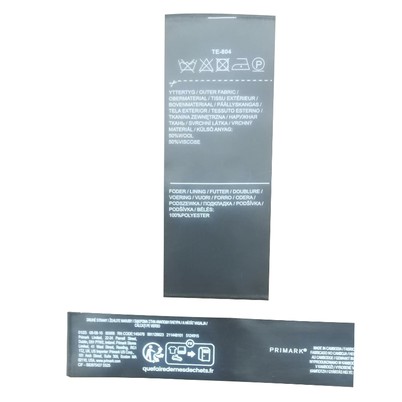
To illustrate the importance of clear labeling, let's look at some examples of recycled soft satin products with well-designed labels. One example is a pair of recycled soft satin pajamas. The label on the pajamas clearly states that they are made from 80% recycled polyester and 20% virgin polyester. It also includes a symbol to indicate that the product has been certified by the GRS.
In addition, the label provides detailed care instructions, including information on how to wash and dry the pajamas to ensure their longevity. This level of detail not only helps consumers make informed decisions about the product but also provides them with the information they need to care for it properly.
Another example is a recycled soft satin pillowcase. The label on the pillowcase includes a QR code that, when scanned, provides consumers with information about the source of the recycled materials, the environmental benefits of choosing a recycled product, and the care instructions for the pillowcase.
This type of labeling not only provides consumers with the information they need but also engages them with the product in a more meaningful way. By using technology to provide additional information, manufacturers can enhance the consumer experience and build trust with their customers.
The Impact of Clear Labeling on Consumer Behavior
Clear labeling on recycled soft satin products can have a significant impact on consumer behavior. When consumers are provided with accurate and transparent information about a product, they are more likely to make a purchase. In fact, studies have shown that consumers are willing to pay more for products that are labeled as sustainable or environmentally friendly.
In addition, clear labeling can help to build brand loyalty. When consumers trust a brand and feel that it is being honest and transparent about its products, they are more likely to become repeat customers. This can lead to increased sales and a stronger brand reputation in the market.
Conclusion
In conclusion, the clarity of information on recycled soft satin product identification labels is crucial in today's market. Consumers are increasingly demanding transparency and want to know exactly what they're buying. By providing clear and accurate information on labels, manufacturers can help consumers make informed decisions, build trust with their customers, and differentiate their products in the market.
As a supplier of Recycled Soft Satin Labels, I'm committed to helping manufacturers improve the clarity of their product labels. Whether it's through the use of simple language, visual aids, or technology, I believe that clear labeling is essential for the success of recycled soft satin products.
If you're interested in learning more about our Recycled Soft Satin Labels or discussing your labeling needs, please don't hesitate to [initiate a conversation]. We're here to help you create labels that effectively communicate the value of your recycled soft satin products to consumers.
References
- Global Recycled Standard (GRS)
- Recycled Claim Standard (RCS)
- Studies on consumer behavior and sustainable labeling