How to check if a washing label is accurate?
Leave a message

In the textile and apparel industry, the accuracy of washing labels is of paramount importance. As a washing label supplier, I understand the critical role these labels play in ensuring the proper care and longevity of garments. In this blog post, I will share some insights on how to check if a washing label is accurate, which is not only beneficial for consumers but also for manufacturers and retailers to maintain product quality and customer satisfaction.
Understanding the Basics of Washing Labels
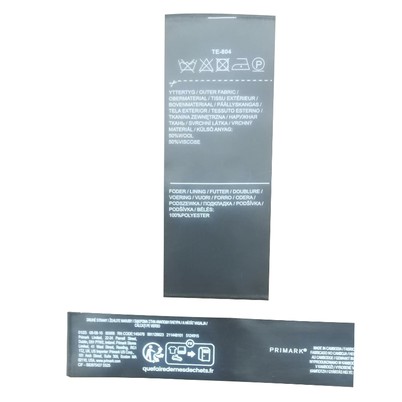
Before delving into the accuracy check, it's essential to understand what a washing label typically contains. A standard washing label includes instructions on washing, drying, ironing, and other care procedures. These instructions are usually represented by internationally recognized symbols, but text descriptions may also be included, especially in regions where symbol recognition is not widespread.
The symbols used on washing labels are standardized by organizations such as the International Organization for Standardization (ISO). For example, a tub with water represents washing, and the number of dots inside the tub indicates the maximum temperature. A square with a circle inside represents drying, and the type of drying method is further specified by additional symbols.
Cross - Referencing with Garment Materials
One of the first steps in checking the accuracy of a washing label is to cross - reference the care instructions with the materials of the garment. Different fabrics have different care requirements. For instance, natural fibers like cotton and linen are generally more durable and can withstand regular washing at moderate temperatures. On the other hand, delicate fabrics such as silk and wool require special care, often involving gentle washing at low temperatures or dry cleaning.
If a washing label on a silk garment indicates that it can be machine - washed at high temperatures, this is likely an inaccurate label. As a washing label supplier, we always ensure that the labels we provide are in line with the typical care requirements of the most common fabrics. However, it's still important for end - users and manufacturers to double - check.
Testing the Instructions
Another effective way to check the accuracy of a washing label is to conduct small - scale tests. For example, if the label suggests a particular washing temperature and detergent, you can take a small, inconspicuous piece of the garment and wash it according to the instructions. Observe the results carefully. If the fabric shrinks, fades, or loses its shape, it may indicate that the washing label is inaccurate.


It's important to note that these tests should be conducted in a controlled environment. Use the same type of washing machine, detergent, and water quality as you would for a regular wash. This will ensure that the results are as accurate as possible.
Comparing with Industry Standards
Industry standards play a crucial role in determining the accuracy of washing labels. As mentioned earlier, the ISO has established a set of symbols and guidelines for washing labels. By comparing the labels on garments with these standards, you can quickly identify any discrepancies.
For example, if a label uses a symbol that is not recognized by the ISO or misinterprets the meaning of a standard symbol, it is an indication of an inaccurate label. As a washing label supplier, we are well - versed in these industry standards and ensure that all our labels comply with them. However, it's still the responsibility of everyone in the supply chain to verify the accuracy.
Seeking Expert Opinions
In some cases, it may be necessary to seek expert opinions. Textile laboratories and industry associations can provide valuable insights into the accuracy of washing labels. They have the expertise and equipment to conduct in - depth analysis of fabrics and determine the appropriate care instructions.
For example, a textile laboratory can analyze the fiber content of a garment and recommend the most suitable washing and drying methods. Industry associations can also provide guidelines and best practices for washing label accuracy.
The Importance of Accurate Washing Labels
Accurate washing labels are not only important for the proper care of garments but also for legal and ethical reasons. In many countries, there are laws and regulations regarding the information provided on product labels. Inaccurate washing labels can lead to consumer complaints, product returns, and even legal issues.
As a washing label supplier, we take our responsibility seriously. We strive to provide accurate and clear labels that meet the needs of our customers. Our Double Sided Wash Label offers more space to include detailed care instructions, while our Ingredient Wash Label can provide information about the fabric composition. Our Barcode Wash Label can be used for inventory management and product tracking.
Conclusion
Checking the accuracy of washing labels is a multi - step process that involves understanding the basics of washing labels, cross - referencing with garment materials, testing the instructions, comparing with industry standards, and seeking expert opinions. As a washing label supplier, we are committed to providing high - quality and accurate labels. However, it's a collective effort from manufacturers, retailers, and consumers to ensure that the information on washing labels is correct.
If you are in the market for reliable and accurate washing labels, please feel free to contact us for procurement and further discussions. We are here to provide you with the best solutions for your washing label needs.
References
- International Organization for Standardization (ISO). Textiles - Care labelling code using symbols.
- Textile Research Journal. Studies on the impact of inaccurate washing labels on garment quality.
- Consumer Product Safety Commission. Regulations regarding product label information.