How to make a butter paper washing label more scratch - resistant?
Leave a message

As a supplier of Butter Paper Washing Labels, I understand the importance of creating labels that can withstand the rigors of washing cycles and maintain their legibility over time. Scratch resistance is a crucial factor in ensuring that the information on the label remains clear and intact, even after multiple washes. In this blog post, I will share some effective strategies on how to make a butter paper washing label more scratch-resistant.
Understanding the Basics of Butter Paper Washing Labels
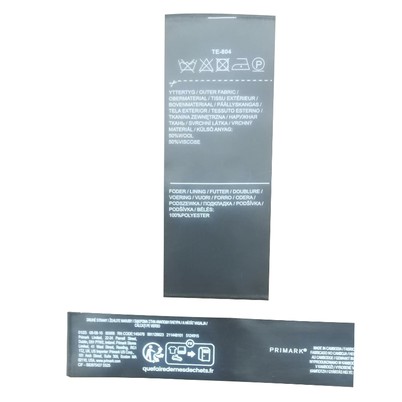
Butter paper washing labels are commonly used in the textile industry to provide care instructions, size information, and other important details about the garment. These labels are typically made from a thin, translucent paper-like material that is lightweight and easy to attach to clothing. However, the nature of butter paper makes it susceptible to scratches and wear, which can compromise the readability of the label.
Choosing the Right Materials
The first step in making a butter paper washing label more scratch-resistant is to choose the right materials. Opt for high-quality butter paper that has a smooth and durable surface. Look for papers that are specifically designed for washing labels and have been treated to enhance their resistance to scratches and abrasion.
In addition to the paper itself, consider using a protective coating or laminate. A clear, scratch-resistant laminate can be applied to the surface of the label to provide an extra layer of protection. This not only helps to prevent scratches but also makes the label more resistant to water, chemicals, and other environmental factors.
Printing Techniques
The printing method used for the label can also have a significant impact on its scratch resistance. Digital printing is a popular choice for butter paper washing labels as it allows for high-resolution printing and precise color matching. However, some digital printing inks may be more prone to scratching than others.
To improve scratch resistance, consider using UV-curable inks. These inks are cured using ultraviolet light, which creates a hard, durable surface that is less likely to scratch. Another option is to use thermal transfer printing, which uses heat to transfer a ribbon of ink onto the label. Thermal transfer printing produces a high-quality, long-lasting print that is resistant to scratches and fading.
Design Considerations
The design of the label can also play a role in its scratch resistance. Avoid using small fonts or intricate designs that may be more difficult to read if they become scratched. Instead, opt for clear, bold fonts and simple designs that are easy to understand.
In addition, consider adding a border or margin around the text and graphics on the label. This can help to protect the edges of the label from scratches and prevent the text from being smudged or rubbed off.
Testing and Quality Control
Before mass-producing a batch of butter paper washing labels, it is important to conduct thorough testing to ensure that they meet the desired scratch resistance standards. There are several methods that can be used to test the scratch resistance of a label, including the Taber Abrasion Test and the Crockmeter Test.
The Taber Abrasion Test involves rubbing the label against a rotating abrasive wheel to simulate the wear and tear that it may experience during washing. The Crockmeter Test, on the other hand, involves rubbing the label against a fabric to test its colorfastness and scratch resistance.
By conducting these tests, you can identify any potential issues with the label's scratch resistance and make adjustments as needed. This helps to ensure that the final product meets the highest quality standards and provides long-lasting performance.
Comparing with Other Types of Washing Labels
It's worth noting that there are other types of washing labels available in the market, each with its own advantages and disadvantages. For example, the Barcode White Recycled Tape Washing Label is made from recycled materials and offers good durability. It is often used in applications where barcode scanning is required.
The DuPont Washing Label is known for its high strength and resistance to tearing and abrasion. It is a popular choice for high-end garments and industrial applications.
The Double Sided Wash Label provides the option to print information on both sides of the label, maximizing the available space for important details.
While these labels have their own unique features, butter paper washing labels still have their place in the market due to their lightweight, cost-effectiveness, and ease of application. By implementing the strategies mentioned above, you can enhance the scratch resistance of butter paper washing labels and make them a more viable option for a wide range of applications.
Conclusion
Making a butter paper washing label more scratch-resistant requires a combination of careful material selection, appropriate printing techniques, thoughtful design, and rigorous testing. By following these guidelines, you can create labels that not only look great but also stand up to the challenges of the washing process.


If you are in the market for high-quality, scratch-resistant butter paper washing labels, I encourage you to reach out to discuss your specific requirements. Whether you need a small batch for a custom project or a large quantity for mass production, we have the expertise and resources to meet your needs. Let's work together to create labels that provide long-lasting performance and enhance the value of your products.
References
- ASTM International. (2018). Standard Test Method for Abrasion Resistance of Organic Coatings by the Taber Abraser. ASTM D4060-18.
- AATCC. (2019). Test Method 8-2019: Colorfastness to Crocking.