What is the difference between a butter paper washing label and a regular washing label?
Leave a message

In the world of garment manufacturing and textile care, washing labels play a crucial role. They are not just small pieces of fabric or paper attached to clothing; they are essential guides that inform consumers about how to properly care for their garments. Among the various types of washing labels available, butter paper washing labels stand out with distinct features compared to regular washing labels. As a supplier of butter paper washing labels, I have witnessed firsthand the differences and advantages that these labels offer. In this blog, I will delve into the disparities between butter paper washing labels and regular washing labels, exploring their materials, functions, durability, and more.
Material Composition
One of the most fundamental differences between butter paper washing labels and regular washing labels lies in their material composition. Regular washing labels are commonly made from fabrics such as cotton, polyester, or a blend of both. These fabric labels are known for their softness and flexibility, which makes them comfortable to wear against the skin. They can be easily sewn onto the garment, ensuring a secure attachment.
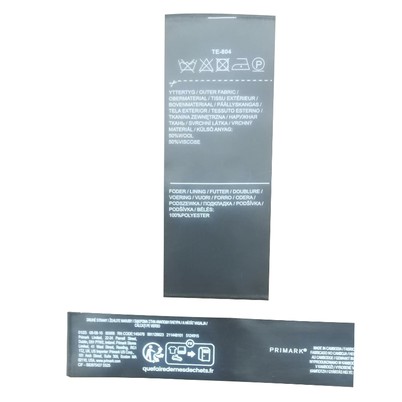
On the other hand, butter paper washing labels are made from a specialized type of paper. This paper is often coated to provide certain properties. The coating gives the butter paper a smooth and glossy finish, which not only enhances its appearance but also provides some level of protection against moisture and wear. The material of butter paper is relatively thin and lightweight, which can be an advantage in terms of not adding too much bulk to the garment.
Printing and Design
When it comes to printing and design, both types of labels have their own characteristics. Regular fabric washing labels can be printed using various methods, such as screen printing, digital printing, or heat transfer printing. Screen printing is a traditional method that allows for bold and vibrant colors, making it suitable for large - scale production. Digital printing, on the other hand, offers high - resolution printing and is ideal for detailed designs and small - batch production. Heat transfer printing can create a smooth and durable print on the fabric label.
Butter paper washing labels, however, are typically printed using offset printing or digital printing techniques. Offset printing is known for its high - quality and precise printing results. It can reproduce fine details, small text, and accurate colors. Digital printing on butter paper allows for quick turnaround times and the ability to print customized designs easily. The smooth surface of the butter paper provides an excellent canvas for sharp and clear printing, which can enhance the readability of the care instructions.


Durability and Longevity
Durability is an important factor to consider when choosing a washing label. Regular fabric washing labels are generally quite durable, especially when they are made from high - quality materials. They can withstand multiple wash cycles without significant fading or damage, as long as they are properly sewn onto the garment. However, over time, the fabric label may start to fray at the edges, which can affect its appearance and readability.
Butter paper washing labels, while not as inherently durable as fabric labels, have their own mechanisms to ensure longevity. The coating on the butter paper provides some protection against water, detergents, and abrasion during the washing process. Additionally, the printing on butter paper is often designed to be fade - resistant. However, if the butter paper label is exposed to excessive friction or harsh washing conditions, it may be more prone to damage compared to a fabric label.
Functionality and Information Display
Both butter paper and regular washing labels serve the primary function of providing care instructions for the garment. However, they may differ in how they present this information. Regular fabric labels can be used to display a wide range of information, including washing temperature, drying methods, ironing instructions, and bleach recommendations. They can also include additional details such as the fabric composition and country of origin.
Butter paper washing labels, in addition to the standard care instructions, can offer some unique features. For example, they can be used to print QR codes. By scanning the QR code on the QR Code Wash Label, consumers can access more detailed information about the garment, such as specific cleaning tips, fabric sourcing, or even the history of the brand. This added functionality can enhance the consumer experience and provide a more comprehensive understanding of the product.
Cost Considerations
Cost is always a significant factor in the decision - making process for garment manufacturers. Regular fabric washing labels can vary in cost depending on the type of fabric, printing method, and quantity ordered. Generally, fabric labels made from high - quality materials and with complex printing designs can be relatively expensive, especially for small - batch production.
Butter paper washing labels, on the other hand, are often more cost - effective, especially for large - scale production. The materials used in butter paper are less expensive than high - quality fabrics, and the printing processes can be optimized for efficiency. This makes butter paper washing labels an attractive option for manufacturers looking to reduce costs without sacrificing too much on quality.
Environmental Impact
In today's environmentally conscious world, the environmental impact of products is a growing concern. Regular fabric washing labels, especially those made from natural fibers like cotton, are biodegradable. However, the production of synthetic fabric labels can have a significant environmental footprint, including the use of chemicals and energy in the manufacturing process.
Butter paper washing labels can also have a relatively low environmental impact. Paper is a renewable resource, and many butter paper products are made from recycled materials. Additionally, the printing inks used on butter paper can be eco - friendly, further reducing the environmental impact.
Applications and Suitability
Regular fabric washing labels are widely used in a variety of garments, including high - end fashion items, sportswear, and children's clothing. Their softness and durability make them suitable for long - term use and for garments that require a more traditional look.
Butter paper washing labels are often used in fast - fashion items, casual wear, and promotional clothing. Their cost - effectiveness and ability to display detailed information make them a popular choice for these types of products. They are also suitable for garments where a lightweight and unobtrusive label is desired.
Conclusion
In conclusion, butter paper washing labels and regular washing labels each have their own unique features and advantages. While regular fabric labels are known for their durability and softness, butter paper washing labels offer cost - effectiveness, high - quality printing, and added functionality such as QR code integration. As a supplier of butter paper washing labels, I understand the importance of providing labels that meet the specific needs of garment manufacturers. Whether it's the need for a traditional fabric label or a modern, high - tech butter paper label, we can offer solutions that balance quality, cost, and functionality.
If you are a garment manufacturer or a business in the textile industry and are interested in exploring the benefits of butter paper washing labels, I encourage you to reach out to me for a detailed discussion. We can work together to determine the best label solution for your products, ensuring that your garments come with clear and reliable care instructions.
References
- Textile Labeling and Care Instruction Standards. International Organization for Standardization (ISO).
- Garment Manufacturing Handbook. John Wiley & Sons.
- Sustainable Packaging and Labeling Trends. Packaging Digest.