What is the material of Color Wash Labels?
Leave a message

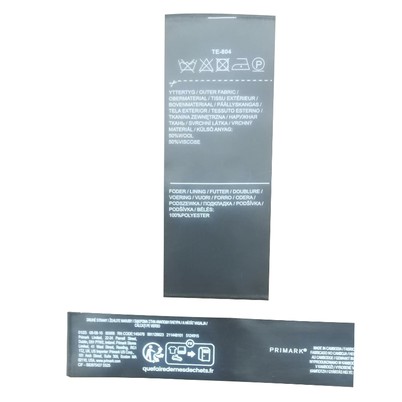
Color wash labels are an essential component in the textile and garment industry, providing crucial information about care instructions, fabric composition, and other details to consumers. As a supplier of color wash labels, I often encounter inquiries about the materials used in these labels. In this blog post, I will delve into the various materials commonly employed in color wash labels, their characteristics, and the factors to consider when choosing the right material for your specific needs.


Polyester
Polyester is one of the most popular materials for color wash labels due to its durability, resistance to fading, and ability to withstand repeated washing and drying cycles. It is a synthetic fiber that offers excellent printability, allowing for sharp and vibrant colors to be reproduced on the label. Polyester labels are also resistant to moisture, chemicals, and abrasion, making them suitable for a wide range of applications, including sportswear, outdoor clothing, and industrial uniforms.
One of the key advantages of polyester labels is their long-lasting performance. They can maintain their clarity and readability even after multiple washes, ensuring that the care instructions and other information remain visible to consumers. Additionally, polyester labels are available in a variety of finishes, including glossy, matte, and semi-gloss, allowing you to choose the one that best suits your brand's aesthetic.
Nylon
Nylon is another synthetic material commonly used in color wash labels. It is known for its strength, flexibility, and resistance to tearing. Nylon labels are particularly suitable for applications where durability is a key concern, such as in heavy-duty workwear and outdoor gear. They can withstand rough handling and exposure to harsh environmental conditions without losing their integrity.
In addition to its durability, nylon also offers good printability, allowing for high-quality graphics and text to be printed on the label. It is available in a range of thicknesses and colors, giving you the flexibility to create labels that meet your specific requirements. Nylon labels are also resistant to moisture and mildew, making them ideal for use in wet or humid environments.
Cotton
Cotton is a natural fiber that is widely used in the textile industry. It is known for its softness, breathability, and comfort, making it a popular choice for clothing labels. Cotton labels are gentle on the skin and do not cause irritation, making them suitable for use in baby and children's clothing.
One of the advantages of cotton labels is their eco-friendliness. They are made from a renewable resource and are biodegradable, making them a more sustainable option compared to synthetic materials. Cotton labels are also available in a variety of textures and finishes, including plain, twill, and satin, allowing you to create labels that add a touch of elegance to your products.
Paper
Paper is a traditional material that is still commonly used in color wash labels, especially for low-cost and disposable applications. It is a versatile material that can be easily printed on and cut into various shapes and sizes. Paper labels are available in a range of weights and finishes, including glossy, matte, and coated, allowing you to choose the one that best suits your needs.
One of the main advantages of paper labels is their affordability. They are generally less expensive than synthetic materials, making them a cost-effective option for small businesses and startups. However, paper labels are not as durable as polyester, nylon, or cotton labels and may not be suitable for applications where the label needs to withstand repeated washing and drying cycles.
Choosing the Right Material
When choosing the material for your color wash labels, there are several factors to consider, including the type of clothing or textile product, the intended use of the label, and your budget. Here are some tips to help you make the right decision:
- Durability: If the label needs to withstand repeated washing and drying cycles, or if it will be exposed to harsh environmental conditions, choose a durable material such as polyester or nylon.
- Printability: If you need to print high-quality graphics and text on the label, choose a material that offers good printability, such as polyester or nylon.
- Comfort: If the label will be in direct contact with the skin, choose a soft and comfortable material such as cotton.
- Eco-friendliness: If sustainability is a concern, choose a material that is made from renewable resources and is biodegradable, such as cotton.
- Budget: Consider your budget when choosing the material for your labels. Paper labels are generally less expensive than synthetic materials, but they may not be as durable.
Our Product Range
As a supplier of color wash labels, we offer a wide range of materials and finishes to meet the diverse needs of our customers. Our product range includes QR Code Wash Label, Barcode White Recycled Tape Washing Label, and Screen Printed Wash Label.
Our QR Code Wash Labels are a modern and innovative solution that allows consumers to access detailed care instructions and product information by scanning the QR code on the label with their smartphone. Our Barcode White Recycled Tape Washing Labels are made from recycled materials and are suitable for use in a variety of applications, including clothing, bedding, and towels. Our Screen Printed Wash Labels are a cost-effective option that offers high-quality graphics and text at a competitive price.
Contact Us
If you are interested in learning more about our color wash labels or would like to discuss your specific requirements, please contact us. Our team of experts will be happy to assist you in choosing the right material and design for your labels. We offer competitive pricing, fast turnaround times, and excellent customer service, ensuring that you receive the best possible value for your investment.
References
- Textile Institute. (2019). Handbook of Textile Fibres. Woodhead Publishing.
- Morton, W. E., & Hearle, J. W. S. (2008). Physical Properties of Textile Fibres. Woodhead Publishing.
- Horrocks, A. R., & Anand, S. C. (Eds.). (2000). Handbook of Technical Textiles. Woodhead Publishing.