What kind of ink is used for screen printed wash labels?
Leave a message

Hey there! As a supplier of Screen Printed Wash Labels, I often get asked about the kind of ink used for these labels. So, I thought I'd write this blog to share some insights on this topic.


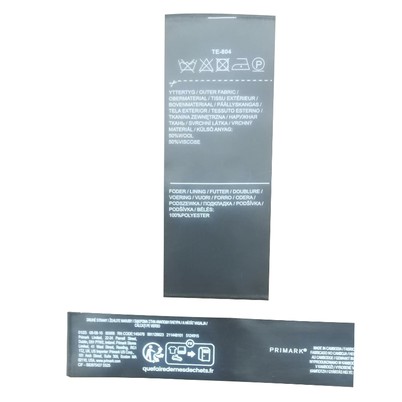
First off, let's understand what screen printed wash labels are. Screen printed wash labels, as the name suggests, are wash labels that are created using the screen printing technique. This process involves pushing ink through a mesh screen onto the label material, creating a detailed and durable print. You can learn more about them on our Screen Printed Wash Label page.
Now, let's dive into the types of ink used for screen printed wash labels.
Water - based Inks
Water - based inks are a popular choice for screen printed wash labels. They're eco - friendly because they have low levels of volatile organic compounds (VOCs). This means they don't release as many harmful chemicals into the environment during the printing process.
One of the great things about water - based inks is their ability to produce a soft - hand feel on the labels. When you touch a label printed with water - based ink, it doesn't feel thick or stiff. Instead, it has a smooth and almost natural feel, which is really important for labels that will be in contact with the skin, like those on clothing.
These inks also offer good color saturation. They can produce bright and vivid colors, making the information on the wash label clear and easy to read. However, they do have some limitations. Water - based inks are more prone to smudging if they're not cured properly. And in high - humidity environments, the drying process can take longer.
Solvent - based Inks
Solvent - based inks have been around for a long time and are still widely used in screen printing. They dry quickly because the solvents in the ink evaporate rapidly. This makes the production process faster, which is a big plus for large - scale label printing.
Solvent - based inks are known for their excellent adhesion to different types of label materials. Whether it's a synthetic fabric or a plastic label, these inks can stick well. They also offer high resistance to abrasion and chemicals. This means that the wash labels printed with solvent - based inks can withstand repeated washing and exposure to detergents without fading or losing their quality.
But there are some downsides. Solvent - based inks contain a significant amount of VOCs, which are harmful to the environment and can also pose health risks to the workers involved in the printing process. So, proper ventilation is essential when using these inks.
UV - curable Inks
UV - curable inks are a more modern option for screen printed wash labels. These inks are cured using ultraviolet light. When the ink is exposed to UV light, it undergoes a chemical reaction and hardens almost instantly. This results in a very fast production process.
UV - curable inks offer excellent durability. They have high resistance to scratching, fading, and chemical damage. The colors printed with UV - curable inks stay vibrant for a long time, even after multiple washes. They also have a high gloss finish, which can make the labels look more professional and eye - catching.
Another advantage is that UV - curable inks are relatively eco - friendly compared to solvent - based inks. They have low VOC emissions because they don't rely on solvents for drying. However, the equipment required for UV curing can be expensive, which can increase the overall cost of production.
Specialty Inks
In addition to the above - mentioned common types of inks, there are also specialty inks that can be used for screen printed wash labels.
For example, fluorescent inks can be used to make the labels more visible. These inks glow under certain lighting conditions, which can be useful for labels on safety - related clothing or products.
Metallic inks can add a touch of luxury to the wash labels. They create a shiny and reflective effect, making the labels stand out. This is often used for high - end clothing brands.
We also offer DuPont Washing Label options. DuPont labels are known for their high - quality materials and printing. We use the appropriate inks to ensure that the labels meet the high standards set by DuPont.
And if you're looking for something more high - tech, our QR Code Wash Label is a great option. The inks used for printing the QR codes need to be precise and durable to ensure that the codes can be scanned accurately even after multiple washes.
When choosing the right ink for screen printed wash labels, several factors need to be considered. The type of label material is crucial. Different materials have different surface properties, and some inks may adhere better to certain materials than others. The intended use of the product also matters. If the label will be on a product that will be washed frequently, a more durable ink like UV - curable or solvent - based ink may be a better choice. And of course, cost is always a factor. Water - based inks are generally more affordable, while UV - curable inks and specialty inks can be more expensive.
As a supplier, we have the expertise to help you choose the right ink for your screen printed wash labels. We understand that every customer has different needs, and we're committed to providing high - quality labels that meet those needs.
If you're interested in our screen printed wash labels or have any questions about the inks we use, don't hesitate to get in touch with us. We're always happy to have a chat and discuss your requirements. Whether you're a small clothing brand or a large - scale manufacturer, we can work with you to create the perfect wash labels for your products.
Let's start a conversation and see how we can help you with your label needs.
References
- "Screen Printing Technology Handbook"
- "Inks for Textile Printing: Principles and Practice"