Are there any regulations for Ingredient Wash Labels?
Leave a message

Hey there! As a supplier of Ingredient Wash Labels, I often get asked if there are any regulations for these labels. Well, the short answer is yes, and in this blog, I'll break it all down for you.
Why Regulations Matter
First off, let's talk about why regulations for Ingredient Wash Labels are so important. These labels are crucial for consumers. They provide information about the ingredients in a product, how to wash it properly, and any special care instructions. Without proper regulations, there could be a lot of misinformation out there, which can lead to damaged clothes, allergic reactions, and other issues.
For example, if a label doesn't accurately list the ingredients, someone with a specific allergy might end up using a product that causes a bad reaction. Or, if the washing instructions are wrong, the item could shrink, fade, or fall apart after just a few washes. That's why governments and industry bodies have stepped in to set some rules.
The Basics of Ingredient Wash Label Regulations
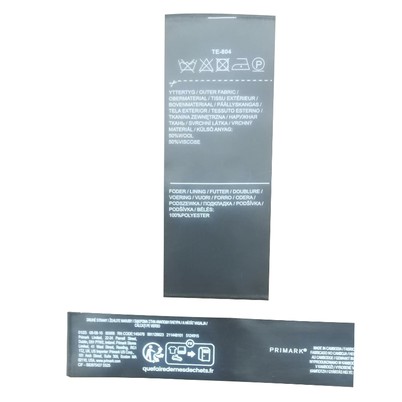
In most countries, there are laws that require manufacturers to provide accurate information on their Ingredient Wash Labels. This includes listing all the major ingredients in the product. For clothing, this might mean listing the types of fibers used, like cotton, polyester, or wool. For other products, it could be chemicals, dyes, or other components.
The washing instructions also need to be clear and accurate. This usually includes details like the recommended water temperature, whether the item can be machine - washed or needs to be hand - washed, and if it can be tumble - dried or should be air - dried.
Another important aspect is the use of symbols. Many Ingredient Wash Labels use standard symbols to represent different washing instructions. For instance, a circle with a cross through it means the item should not be dry - cleaned. These symbols are recognized internationally, which makes it easier for consumers around the world to understand the labels.
Regional Differences
Regulations can vary from region to region. In the United States, the Federal Trade Commission (FTC) has rules about textile fiber content and care labeling. They require that labels accurately state the percentage of each fiber in a product. For example, if a shirt is 60% cotton and 40% polyester, the label must clearly show those percentages.
In the European Union, there are also strict regulations. The EU has a set of standards for textile products, which include requirements for Ingredient Wash Labels. They focus on consumer safety and environmental protection. For example, they limit the use of certain chemicals in textile products and require labels to indicate if a product contains any potentially harmful substances.
Our Role as a Supplier
As a supplier of Ingredient Wash Labels, we have to stay on top of all these regulations. We work closely with our clients to make sure the labels we provide meet all the necessary requirements. We use high - quality materials and printing techniques to ensure that the labels are durable and the information is clear.
We offer a variety of different types of Ingredient Wash Labels. For example, we have the QR Code Wash Label. These labels are really cool because they can store a lot more information than a traditional label. Consumers can scan the QR code with their smartphones and get detailed information about the product, including its ingredients, washing instructions, and even its origin.
We also have the DuPont Washing Label. DuPont is a well - known brand, and their labels are very high - quality. They are resistant to fading, shrinking, and tearing, which means the information on the label will stay clear for a long time.
Another option is the Barcode White Recycled Tape Washing Label. These labels are made from recycled materials, which is great for the environment. The barcode can be used for inventory management and other purposes, making them a practical choice for many businesses.


Meeting the Challenges
One of the challenges we face as a supplier is keeping up with the changing regulations. As new research comes out and consumer demands change, the rules can be updated. We have a team of experts who are constantly monitoring these changes and making sure our labels comply.
Another challenge is dealing with different client needs. Some clients might want a very simple label, while others might need a more elaborate one with a lot of information. We have to be flexible and able to customize our labels to meet these different requirements.
Looking to the Future
The future of Ingredient Wash Labels looks interesting. With the rise of technology, we can expect to see more innovative labels. For example, there could be labels that change color to indicate if a product has been washed at the wrong temperature. Or, labels that can be updated digitally to provide new information about a product.
We're also likely to see more focus on sustainability. Consumers are becoming more aware of the environmental impact of the products they buy, and they'll expect Ingredient Wash Labels to reflect that. This could mean more labels made from recycled materials or labels that provide information about a product's carbon footprint.
Let's Connect
If you're in the market for Ingredient Wash Labels, we'd love to hear from you. Whether you're a small business or a large manufacturer, we can provide high - quality labels that meet all the necessary regulations. We can work with you to design the perfect label for your product, taking into account your specific needs and requirements.
So, don't hesitate to reach out and start a conversation. We're here to help you make sure your products have the best Ingredient Wash Labels possible.
References
- Federal Trade Commission. (n.d.). Textile Fiber Products Identification Act.
- European Union. (n.d.). Textile product regulations.