How to store flat printed labels to prevent them from sticking together?
Leave a message

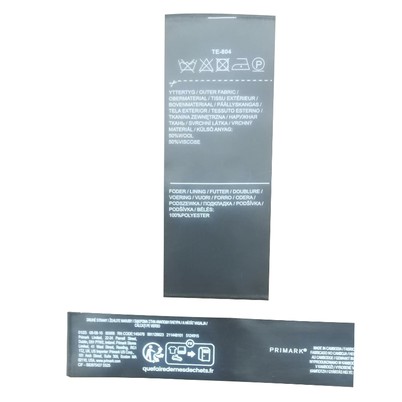
Hey there! As a supplier of flat printed labels, I've seen firsthand how quickly these little guys can turn into a sticky mess if not stored properly. It's super annoying when you're trying to grab a label for an order, and they're all stuck together. Not only does it waste time, but it can also damage the labels, which is a big no - no. So, I'm here to share some tips on how to store flat printed labels to prevent them from sticking together.
Understanding the Problem
Before we jump into the solutions, let's talk about why labels stick together in the first place. Most flat printed labels are coated with adhesives. When these labels are stacked on top of each other, the adhesive can transfer from one label to another over time, especially if there's pressure or heat involved. Humidity can also play a role, softening the adhesive and making it more likely to bond with neighboring labels.
Store in a Cool, Dry Place
One of the simplest and most effective ways to prevent label sticking is to keep them in a cool, dry environment. Heat and humidity are the enemies of label storage. High temperatures can cause the adhesive to become more pliable, increasing the chances of it sticking to other labels. Humidity, on the other hand, can seep into the labels and affect the adhesive properties.
I recommend storing your flat printed labels in a room with a consistent temperature, ideally between 60°F and 70°F (15°C - 21°C), and a relative humidity of around 40% - 50%. You can use a dehumidifier in more humid areas or an air - conditioner in hot places to maintain these conditions.
Use Separation Materials
Another great way to keep labels from sticking is to use separation materials between each sheet or stack of labels. You can use wax paper, parchment paper, or even thin plastic sheets. These materials create a barrier between the labels, preventing the adhesive from making direct contact with neighboring labels.
When placing the separation material, make sure it covers the entire surface of the label. You can cut the paper or plastic to the same size as the label sheet for a neat and efficient storage solution. For larger label orders, I suggest separating stacks of labels with cardboard dividers. This adds an extra layer of protection and helps to distribute the weight evenly, reducing the pressure on the labels.
Stack Labels Correctly
The way you stack your labels also matters. Avoid stacking them too high, as the weight of the upper labels can put pressure on the lower ones, causing the adhesive to spread and stick. Instead, keep your stacks at a reasonable height. If you have a large quantity of labels, consider using multiple storage containers or shelving units to distribute the labels evenly.
When stacking, make sure the labels are aligned properly. Misaligned labels can cause uneven pressure and increase the risk of sticking. You can use a ruler or a straight edge to ensure that all labels are neatly stacked.
Consider Storage Containers
Choosing the right storage container is crucial. Opt for containers that are made of materials that won't react with the labels or the adhesive. Plastic containers with tight - fitting lids are a popular choice. They're durable, protect the labels from dust and moisture, and can be easily stacked on shelves.
For smaller label quantities, you can use plastic bags. Just make sure to squeeze out as much air as possible before sealing the bag to reduce humidity inside. If you're storing labels for a long time, consider using vacuum - sealed bags. These bags remove all the air, creating an airtight environment that helps to preserve the labels.
Avoid Overcrowding
Overcrowding your storage space can lead to a host of problems, including label sticking. When labels are packed too tightly together, there's not enough room for air circulation, which can cause heat and humidity to build up. It also increases the pressure on the labels, making them more likely to stick.
Make sure to leave some space between the labels and the sides of the storage container. This allows for better air circulation and reduces the chances of the labels getting damaged. If you need to store a large number of labels, invest in a larger storage unit or multiple containers to ensure there's enough space for each label.
Check Regularly
It's a good idea to check your stored labels regularly. This allows you to catch any early signs of sticking or damage. If you notice any labels starting to stick together, you can take action immediately. You can try gently separating the labels using a thin tool like a credit card or a butter knife.
Regular checks also give you the opportunity to assess the storage conditions. If you notice that the temperature or humidity in the storage area has changed, you can make adjustments to ensure the labels remain in good condition.
Explore Specialized Storage Solutions
There are also some specialized storage solutions available in the market. For example, there are label dispensers that can be used for storage as well as dispensing. These dispensers often have features that help to keep the labels separated and organized.


Some companies also offer custom - made storage racks designed specifically for flat printed labels. These racks can be adjusted to fit different label sizes and quantities, providing a tailored storage solution for your business.
Related Products
If you're in the market for other types of labels, we also offer a wide range of options. Check out our Woven Satin Labels for Clothing, which are perfect for adding a touch of elegance to your clothing items. We also have Crochet Brand Trademark Labels for those looking for unique and handmade - looking labels. And for a more high - tech option, our Hologram Label Sticker provides an eye - catching and secure labeling solution.
Conclusion
Storing flat printed labels properly is essential to keep them in good condition and prevent them from sticking together. By following these tips, such as storing in a cool, dry place, using separation materials, stacking correctly, and choosing the right storage containers, you can ensure that your labels are always ready for use.
If you're in need of high - quality flat printed labels or any of our other label products, don't hesitate to reach out. We're here to help you with all your labeling needs. Whether you're a small business or a large corporation, we can provide customized solutions to fit your requirements. Contact us today to start a discussion about your label orders!
References
- Label Industry Association Publications
- Manufacturer's Guidelines for Label Storage
- Personal Experience as a Flat Printed Labels Supplier